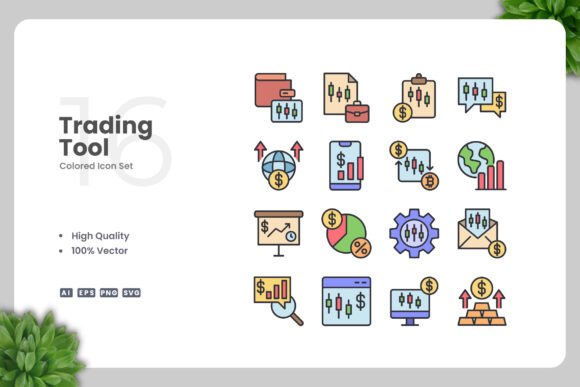
Trading Tool Colored Icons
First Impressions: Clean, Versatile, and Practical
Trading Tool Colored Icons immediately caught my eye with its simple yet effective design. The clean lines and minimal details suggest a focus on clarity and usability, which makes it ideal for a wide range of projects. This is not a flashy or overly intricate set of icons—rather, it’s the kind of design that feels right at home in both digital and physical applications.
The layout is well-organized, and the theme is consistent across all icons. Whether I’m looking at a tool, a symbol, or a representation of a concept, the visual personality remains cohesive. It doesn’t scream for attention but rather blends seamlessly into any project where subtlety and professionalism are key.
This design would naturally fit into an embroidery project that requires a polished, modern look. Think of a custom tote bag for a small business, a personalized baby onesie, or a decorative pillow cover for a boutique shop. It’s the kind of design that can be adapted to many uses without losing its identity.
Real-World Embroidery Performance
When considering Trading Tool Colored Icons for real-life embroidery, I think about how it translates from screen to stitch. The design’s simplicity means it should work well on most standard machine embroidery designs. However, I’d recommend testing it on different fabrics before committing to a larger project.
For custom apparel like t-shirts or sweatshirts, the icons would hold up well. They’re not too dense, so they won’t cause issues with stitch density or fabric puckering. On a tote bag design, they could add a subtle yet stylish touch without overwhelming the overall look.
For baby items, such as onesies or blankets, the clean style is a plus. Parents often prefer understated designs that don’t clash with their home decor. Trading Tool Colored Icons could be a great fit here, especially if paired with soft thread colors and proper stabilizer.
On caps or hats, the design might need some adjustment depending on the hoop size. If the icon is too detailed, it could become lost when stitched onto a curved surface. That’s why I’d advise checking the design’s dimensions and testing it on a similar fabric before using it for a client project.
Where to Be Careful
While Trading Tool Colored Icons is versatile, there are situations where it may not perform as well. For instance, on small hoop sizes, the details could get lost or distorted. If you're working on a patch or a small applique design, this could be an issue.
Textured fabrics, thin materials, or stretchy garments may also present challenges. The design’s simplicity helps in these cases, but the fabric type will still affect the final outcome. Dark fabrics might require a different thread color to ensure visibility, while layered garments could complicate the stitching process.
If you’re planning to use these icons on a holiday gift or a personalized product that will see frequent washing, consider the durability of the stitches. A fill stitch or satin stitch might be necessary to keep the design intact over time.
Impact on Visual Appeal and Customer Perception
Trading Tool Colored Icons has the potential to elevate the visual appeal of any finished product. Its clean aesthetic adds a professional touch that can make a handmade product or custom apparel stand out. For an Etsy seller or small shop owner, this could mean more customer interest and better sales.
Stitching clarity is another important factor. The design’s simplicity ensures that each line and shape is distinct, making it easier to read and appreciate. This is especially important for commercial embroidery projects where the design needs to be instantly recognizable.
From a branding perspective, Trading Tool Colored Icons can help maintain consistency across different products. Whether it's a printed mockup or an embroidered patch, the design remains uniform, reinforcing brand identity and customer trust.
Practical Notes for Designers and Crafters
Before using Trading Tool Colored Icons in your next project, here are a few practical tips:
- Test the design on scrap fabric first to see how it looks in different thread colors and stabilizer types.
- Check the stitch density to ensure it’s appropriate for the fabric you’re using.
- Confirm the hoop size required for the design to avoid any issues during the embroidery process.
- Inspect small details closely—sometimes what looks good on screen may not translate perfectly to fabric.
- Try the design in black and white mockups to see how it performs without color.
- Compare the design on light and dark fabric backgrounds to ensure visibility and contrast.
- Use the right stabilizer for your project to prevent puckering or distortion.
- Make sure the design works for both personal and commercial use, and check the licensing terms before selling finished items or digital products.
Conclusion: A Reliable Choice for Many Projects
Trading Tool Colored Icons is a solid choice for designers and crafters looking for a clean, adaptable design. Its simplicity and versatility make it suitable for a wide range of embroidery projects, from custom apparel to personalized gifts and commercial merchandise.
While it may not be the most complex set of icons available, its practicality and ease of use make it a valuable addition to any designer’s toolkit. Whether you’re an Etsy seller, a small business owner, or a hobbyist, this design could help you create high-quality, professional-looking products that customers will love.