Importing and Exporting Colored Icons: Graphics for Real Business
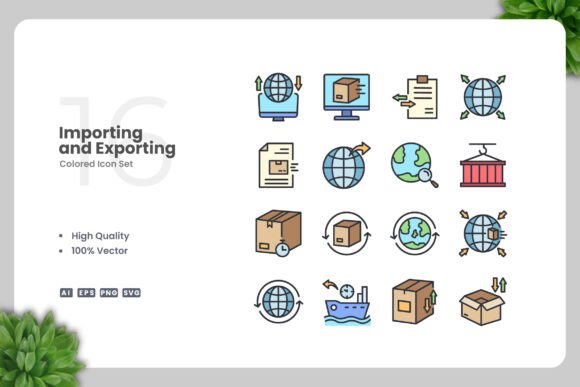
As a brand designer who has worked with countless small businesses, I’ve come to value design assets that are both functional and adaptable. Importing and Exporting Colored Icons is one such graphic design asset that offers versatility across multiple platforms. Its simple and clean design makes it ideal for websites, mobile apps, social media, and print materials, but what really stands out is how well it integrates into real local business branding projects.
The First Impression: A Design That Speaks to Multiple Audiences
Importing and Exporting Colored Icons immediately conveys a sense of clarity and professionalism. The design feels modern yet approachable, making it suitable for a wide range of brand personalities—from friendly and playful to elegant and sophisticated. This adaptability means it can work for a bakery, a coffee shop, or a handmade soap business without feeling out of place.
The icons have a soft yet defined edge that suggests creativity and attention to detail. They’re not overly decorative, which keeps them from competing with other visual elements in a design. Instead, they complement the overall aesthetic, making them a great choice for small business branding where simplicity is key.
Real-World Applications for Local Businesses
When working on a local business project, such as a new line of organic skincare products, I often look for design elements that can be used across multiple touchpoints. Importing and Exporting Colored Icons fits perfectly into this workflow. It can be used in logo design, product labels, packaging accents, and even promotional banners.
For example, when designing a label for a handmade candle brand, these icons can serve as subtle visual cues that reinforce the product’s theme. They also work well in social media graphics, where a consistent visual language helps build brand recognition. Whether it's a menu graphic for a café or a flyer for a seasonal sale, the icons add a polished finish without overwhelming the design.
Supporting Business Presentation and Brand Identity
One of the most valuable aspects of Importing and Exporting Colored Icons is how it supports stronger first impressions. In a competitive market, a well-designed product or marketing material can make all the difference. These icons help create a more professional look, which in turn builds customer trust and improves product recognition.
They also contribute to a clearer visual hierarchy, allowing important information to stand out while maintaining a cohesive brand identity. For a boutique store or a home decor shop, this level of consistency is essential for creating a memorable shopping experience.
Where Importing and Exporting Colored Icons Shines
This graphic design asset excels in areas where visual appeal is crucial. Product labels benefit from its clean lines and subtle color variations, making it easier for customers to identify and connect with the brand. Similarly, promotional banners and seasonal packaging can use these icons to enhance the overall aesthetic without distracting from the message.
Importing and Exporting Colored Icons is also useful in printable design and digital product presentations. Whether it's a thank-you card for a customer or a product mockup for a client, these icons add a refined touch that elevates the entire design.
When to Use With Caution
While Importing and Exporting Colored Icons is versatile, there are situations where it may not be the best fit. In formal corporate branding, for instance, the icons might feel too casual. They also require careful placement on very small labels or crowded layouts, where their detail could get lost or become distracting.
Additionally, in luxury minimalist brands or designs where text takes precedence, these icons should be used sparingly. It’s important to test them in different contexts to ensure they don’t compete with critical information or legal text.
Practical Designer Notes for Small Business Use
Before finalizing any design, I always recommend testing the icons on real packaging mockups. This helps visualize how they’ll look in the physical world. Checking black and white usage is also essential, as some designs may lose their impact without color.
Previewing the icons on small labels ensures they remain legible and effective. Testing them with brand colors helps maintain consistency, and comparing them with competitor packaging can reveal opportunities for differentiation. Reviewing PNG transparency and inspecting SVG editability ensures the design remains flexible for future changes.
Finally, always confirm commercial licensing before using any design asset for client work or product sales. Importing and Exporting Colored Icons appears to offer clear terms, but it’s always better to verify.
Conclusion: A Valuable Addition to Any Brand Designer’s Toolkit
Importing and Exporting Colored Icons is more than just a collection of illustrations—it’s a practical tool that supports small business branding, packaging design, and marketing visuals. Whether you're working on a handmade business or a food label, these icons provide a professional, adaptable solution that enhances the overall brand experience.